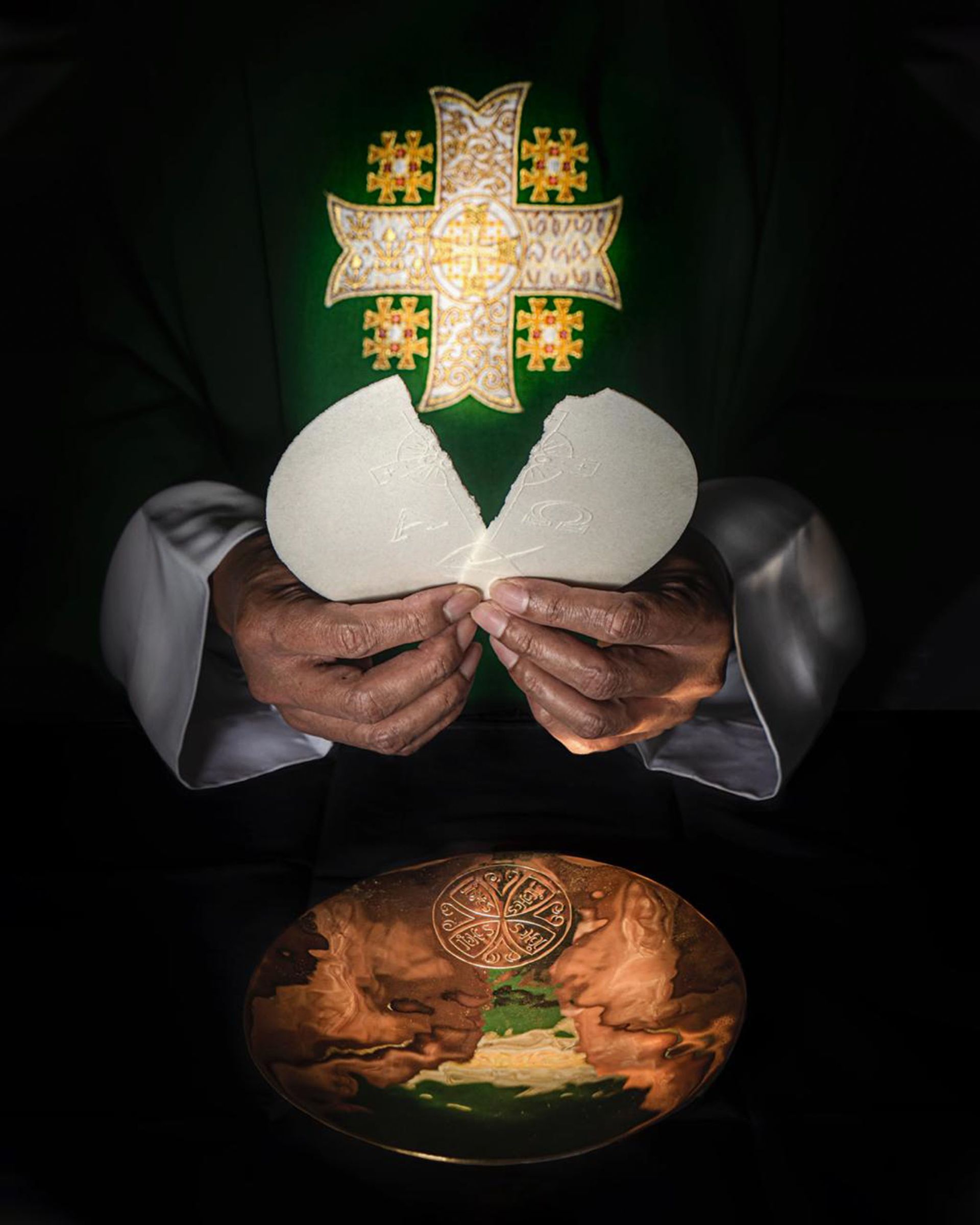

Jesus Does Not Give Up on us, Even When We Fail

Pilar Azmani • September 17, 2024

Jesus Does Not Give Up on us, Even When We Fail


We continue to read and reflect upon the gospel according to Mark this liturgical year. I like Mark very much. And no, it is not because Mark is the shortest and first written gospel. It’s because I like the method in which Mark chose to spread the message about Jesus Christ. In his gospel, Mark references all the followers of Jesus as weak in following Jesus’ teachings and failing to follow his mission. In fact, the disciples and those who followed Jesus failed all the time. Thus, the gospel of Mark is a really a story of failure.  


There are many examples of Jesus’s followers and the disciples failing. Jesus’ closest disciples often did not understand his parables and recommendations. Their faith was frequently questioned and they often feared for their physical life. They betrayed Jesus during Holy Week and they left their Master alone to suffer and die. Peter denied Jesus three times during his trial. Additionally, many other followers of Jesus did not grasp the message of Jesus and failed to follow him as well. Lastly, even women, the most faithful followers of Jesus failed because they did not recognize Jesus after his resurrection. They thought he was the gardener. Because of this Jesus often expressed his frustration and disappointment after talking to his disciples in the gospel of Mark.  


We see Jesus’ frustration in today’s gospel passage assigned to the 25th Sunday in Ordinary time. Jesus made a lot of effort to explain to his closest disciples that he was going to suffer and die. To explain that His mission must end on Calvary, where he would die on the cross. Unfortunately, his disciples did not understand Jesus’ point. They ignored the message, which was important to Jesus. Instead, they argued among themselves “who is the greatest.” In his disappointment, Jesus showed them a child as an example of humility and meekness.  


Why did Mark choose this kind of method to write about Jesus and his message? Why does Mark show Jesus’ disciples as weak and fragile?  


Mark writes his gospel in 60AD. It was a time of terrible persecution of the first Christian community by Nero and Vespasian. Christians were tortured and martyred, families destroyed and others were hunted. Many of the followers of Jesus were not ready or willing to suffer and die for Christ. They betrayed their faith and left the Christian community. After, there was a dispute and division among the believers, “if those who failed can still call themselves Christians and if they are worthy to follow Jesus anymore.”  


Mark writes his gospel to this kind of community of believers and in these circumstances of religious persecution. Mark understands the pain and dilemma of persecuted Christians. Mark’s intent is to make a clear point that it is OK to fail and still be a disciple of Jesus. In the last chapter of Mark, the Risen Christ calls his disciples to meet in Galilee (Mark 16:7). It is a very significant call. Although the disciples failed completely, Jesus did not give up on them, and they did continue his mission from there.  


I like the gospel of Mark because we as human beings can relate to failing. We are all similar to Jesus’ followers and we often fail. Mark brings us good news though, that we are allowed to fail and still come back and follow Jesus again. Let’s be grateful for the gospel of Mark and the Good News which encourages us to follow Jesus closely and never give up on Jesus and our mission.


       Fr. Andrzej


By Jenny Drzewiecki March 19, 2026
This weekend’s Gospel for the Fifth Sunday of Lent describes one of the most powerful moments in the ministry of Jesus: the raising of Lazarus (John 11:1–45). Standing before the tomb of his friend, Jesus proclaims, “I am the resurrection and the life.” With these words and with deep compassion, He calls Lazarus out of the darkness of death and restores him to life. This Gospel reveals the heart of Christ – full of mercy, compassion, and deep concern for those who suffer. Jesus does not remain distant from human pain. He enters into it, weeps with those who mourn, and brings new life where there seemed to be only darkness, confusion, and despair. In a beautiful way, the stained-glass windows in our church echo this same message of mercy and hope. Inspired by our patron, St. Martin of Tours, the windows illustrate the works of mercy that shaped his life and ministry. St. Martin followed Christ by seeing those in need and responding with generosity, compassion, and courage. His well-known act of sharing his cloak with a poor man is just one example of a life devoted to caring for others.  The Gospel story of Lazarus reminds us that acts of mercy are never small or insignificant. When we feed the hungry, visit the sick and the imprisoned, or help those in need, we participate in Christ’s own mission of bringing life where there is suffering and hope where there is darkness. As sunlight shines through these stained-glass windows, may they remind us that the works of mercy are not only beautiful images in colored glass, but a living calling for each of us. Like St. Martin, may we allow the light of Christ’s compassion to shine through our lives, bringing hope, healing, and new life to the world around us. We are still expecting one more window depicting St. Martin, but we already appreciate the beauty and message these windows bring to our church. I am very grateful to all who made this project possible: the artists, Kim Kostuch and Slawormir Miskow, the team who prepared and supervised the project, those who helped install the windows, the generous donors, and all of you, dear parishioners, for your support and encouragement. Thank you very much. Fr. Andrzej
By Jenny Drzewiecki March 13, 2026
The body content of your post goes here. To edit this text, click on it and delete this default text and start typing your own or paste your own from a different source.
By Jenny Drzewiecki March 3, 2026
On this Third Sunday of Lent, we hear the story from the Gospel of John (4:5-42) about Jesus and the Samaritan woman at the well. In Jewish culture, a well was more than just a place to draw water. It was often a meeting place between a man and a woman – even a place where love stories began. In the Bible, important couples met at wells. Isaac first met Rebekah at a well (Genesis 24). Moses met Zipporah at a well (Exodus 2). A well was a place of encounter, promise, and new beginnings.  With this in mind, today’s Gospel becomes even more beautiful. Jesus meets a woman who comes alone, carrying not only a water jar, but also a wounded heart. At first, she hesitates. She keeps her distance. She is careful and guarded. But Jesus speaks gently. He does not judge her. He touches the painful parts of her life with truth and love. Slowly, she opens her heart. She allows herself to be seen and known. And in that moment, she begins to experience healing. This is not just a casual conversation. It is a meeting of love – God seeking His beloved. Jesus, the Bridegroom, meets a wounded soul and offers her living water. Then something changes. She leaves her jar behind. Leaving the jar is a powerful sign of transformation. It symbolizes leaving behind her old life, her daily burdens, and even her sin. The jar that brought her to the well is no longer important. She runs back to the village and says, “Come and see!” The woman who once avoided others now becomes a witness. Her encounter with Jesus changes her life completely. Lent is our time to come to the well. We may come with hesitation, with shame, or with wounds. But Jesus is waiting for us. He speaks gently to our hearts. If we allow Him, He will heal us. And when we truly meet Him, we too will leave something behind – our fear, sin, hopelessness – and we will find the courage to share the Good News with others. Fr. Andrzej
By Jenny Drzewiecki February 24, 2026
On the Second Sunday of Lent, the Church invites us to reflect on the Transfiguration of the Lord. In the Gospel, Jesus takes Peter, James, and John up Mount Tabor. There, before their eyes, He is changed. His face shines, and His clothes become dazzling white (Mark 9:3). For a moment, the disciples see His divine glory. This Gospel helps us understand what Lent is about. Lent is like climbing a mountain. It takes effort. We pray more. We fast. We try to change bad habits. Sometimes it feels difficult. But just as the disciples saw the glory of Jesus at the top of the mountain, we know that our Lenten journey leads to the joy of Easter. Beyond sacrifice, there is light. Beyond effort, there is peace – a peace that the world cannot give. The Transfiguration also reminds us of our final goal. One day, we hope to share in Christ’s glory in heaven. Lent is not only about giving something up. Lent is about allowing God to change us. Little by little, He wants to transform our hearts so that we reflect His love and His peace. Moses and Elijah appear with Jesus on the mountain. Both met God in the desert. The desert in the Bible is a place of silence, prayer, and trust. During Lent, we are invited to enter our own “desert.” This may simply mean turning off the television, putting aside the phone, spending a few quiet minutes in prayer, or coming to church for extra time with the Lord. We need quiet space to hear God’s voice and to receive the peace that only He can give. You may notice that our church decorations reflect this desert theme. Even the empty baptistery reminds us that Lent is a time of waiting and longing. The desert teaches us that real peace does not come from comfort, money, or success. It comes from being close to God. When Peter sees Jesus transfigured, he says, “Rabbi, it is good that we are here.” He wants to stay. He wants to build tents and remain in that beautiful moment. We understand him. When we feel close to God, when we experience peace in prayer, we want it to last forever. But Jesus leads the disciples back down the mountain. They must return to daily life. This is important for us. Our prayer and Lenten sacrifices are not meant to separate us from the world, but to help us love the world better. If our prayer brings us true peace, we will become more patient, more forgiving, more generous. We will bring Christ’s peace into our families, workplaces, and parish. As we continue our Lenten journey, let us ask the Lord to transform us. May this season help us experience the peace that the world cannot give – the peace that comes from knowing we are loved by God.  Let us pray for one another during this holy season. Fr. Andrzej
By Jenny Drzewiecki February 19, 2026
Last Wednesday, we began the holy season of Lent. During the Ash Wednesday liturgy, we blessed and distributed ashes to all who came forward. This ancient ritual, accompanied by the words, “Remember that you are dust, and to dust you shall return,” carries a deep and beautiful meaning for us. For some Catholics, Lent and ashes can feel heavy. They may associate them only with repentance, sacrifice, and conversion, and therefore see this season in a negative light. Yet in truth, the ashes and the words spoken over us contain a message that is not only serious – but also hopeful, tender, and deeply encouraging. These words come from the Book of Genesis (3:19). After Adam and Eve left the Garden of Eden, God spoke to them in a moment marked by human weakness and failure. But even then, God’s words were not a rejection. They were a reminder. God had created them in His image and likeness. Their dignity did not disappear because of sin. They were formed from the soil of Paradise, and Paradise was created for them. The Garden of Eden – our true and eternal home – remains humanity’s destiny. When God says, “You are dust,” He reminds them where we come from. And when He says, “To dust you shall return,” He points them toward where they belong: back to Him. Even outside of Eden, God never abandoned His children. He continues to wait, to call, and to lead us home. This promise was not only for the first humans. It is for each of us. It is no coincidence that the Church places these words at the very beginning of Lent. When we truly understand them, we begin to see Lent not as a season of gloom, but as a journey back home. The words spoken on Ash Wednesday may be among the most honest and loving words God speaks to humanity. They remind us of our fragility – but even more, they remind us of our dignity and our destiny. With this hope in our hearts, we can enter Lent with renewed enthusiasm. Our prayer, fasting, and almsgiving are not burdens, but rather are steps on the path that leads us back to our heavenly home. Each small sacrifice, each act of charity, each quiet prayer becomes a way of cooperating with God’s loving work within us. May this Lent be a meaningful and grace-filled journey for each of us, and for our entire parish community of St. Martin of Tours Parish.  Fr. Andrzej
By Jenny Drzewiecki February 15, 2026
In today’s Gospel, Jesus speaks words that are both encouraging and challenging: “I have come not to abolish the Law but to fulfill it.” With these words, He reminds us that God’s commandments are not meant to trap us in a list of rules, but to guide us toward true life. For many people, the Law can sound like a series of do’s and don’ts, something to be followed mainly out of fear of punishment. Jesus invites us to something much deeper. He teaches that it is not enough to obey God only on the outside. What truly matters is the heart. Avoiding wrongdoing is important, but Jesus calls us further – to heal anger, to forgive, and to be faithful not only in our actions but also in our thoughts and intentions. The Law God has given is good and holy, but it bears fruit only when it is welcomed into our hearts. When we live God’s commandments out of love, they no longer feel like a burden. Instead, they become a path that shapes our choices, strengthens our relationships, and guides the way we treat one another. Love – not fear – is the true reason for living God’s law. We can see this in everyday life. The deepest reason to remain faithful in marriage is love for one’s spouse, not fear of breaking a commandment. The true reason to worship God and come to church on Sunday is love of God, not fear of failing in our obligation. When love, rather than fear of punishment, becomes our motivation, faithfulness to God’s Law becomes more natural, joyful, and meaningful. This same message is found in today’s first reading from Sirach. God places before us life and death and lovingly invites us to choose life. In Psalm 119, the psalmist rejoices in God’s law – not as a threat, but as a source of wisdom and joy. God’s commandments are called wisdom because they teach us how to live well and how to love rightly. Jesus fulfills the Law by revealing its true purpose: to lead us into a loving relationship with God and with one another. This is the path Jesus invites us to walk – not a path of fear, but a path of love. Do I follow God’s commandments out of fear, or out of love? This week, may we choose one small way to live God’s law with love – through forgiveness, patience, or a quiet act of kindness – and allow God’s wisdom to shape our hearts. Fr. Andrzej
More Posts