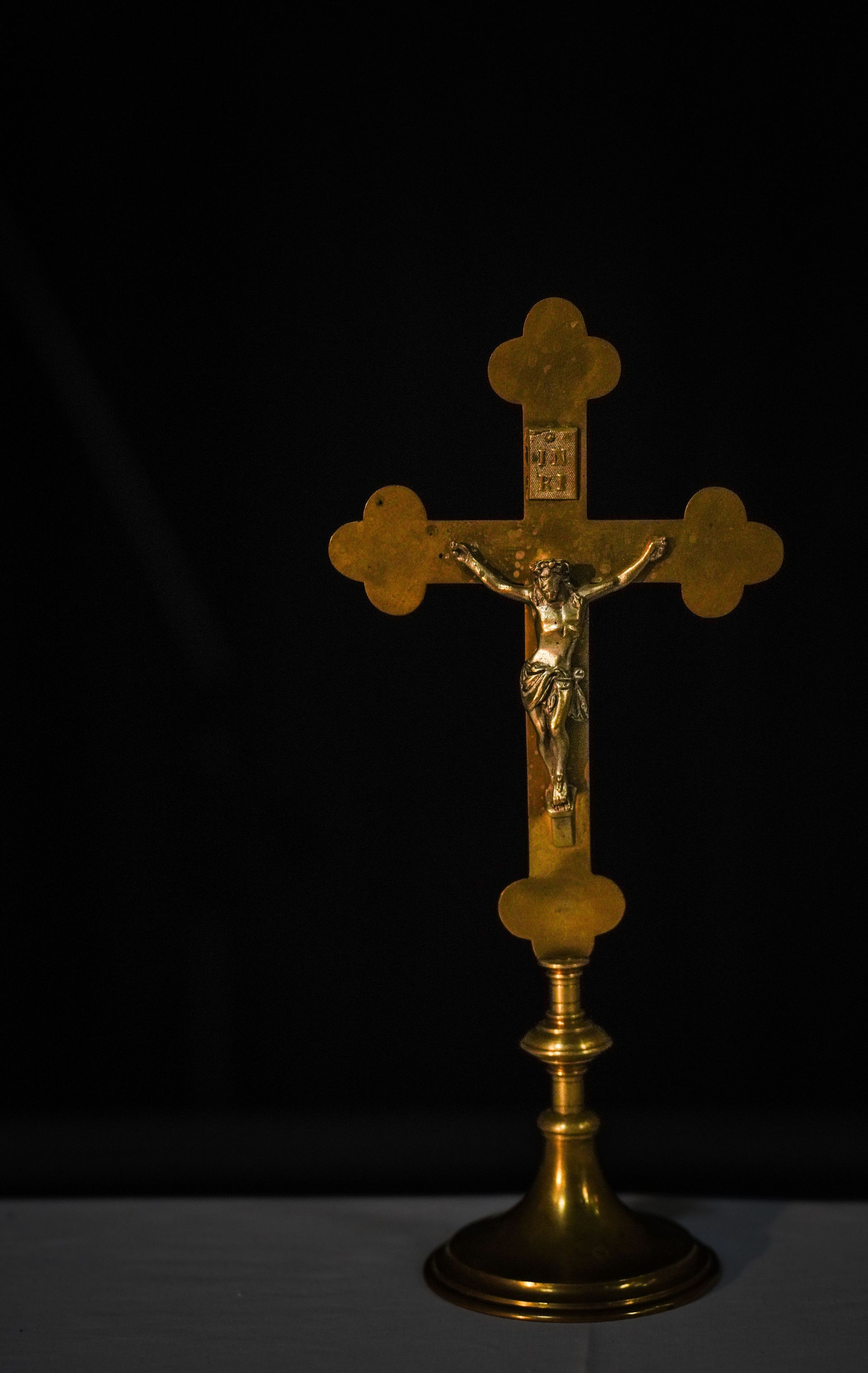

Easter Message – “Do Not Be Afraid” (Matthew 28:1–10)

Jennifer Moscatello • April 5, 2026

On that first Easter morning, as dawn was just breaking, the women came to the tomb carrying sorrow, confusion, and fear in their hearts. They expected to find death. Instead, they encountered life – unexpected and life-changing.


At the heart of this Gospel is a simple and powerful message, spoken first by the angel and then by the Risen Lord Himself: “Do not be afraid.”


Fear is a real part of our human experience. It can hold us back, isolate us, and keep us from living fully in God’s grace. The women came with fear, yet they did not let it stop them from seeking Jesus. And it was there, in their faithful seeking, that they encountered the Risen Lord.


These words, “Do not be afraid,” do not ignore our fears but they gently invite us to move beyond them.


An encounter with the Risen Christ was essential for the women and His other disciples. Similarly, it become essential for us when we meet the Risen Lord. This encounter changes everything. It is not just something we remember – it is something we live. When we truly meet Him:


  • fear begins to turn into trust,
  • confusion gives way to clarity,
  • sorrow opens to joy,
  • and hesitation becomes a call to share the Good News.


The women who came in silence now run with joy and urgency to tell others. Their fear and doubt are transformed into courage. This is discipleship: not the absence of fear or doubt, but a heart changed by Christ.


To be a true disciple of Jesus means allowing His Resurrection to touch every part of our lives – especially the places where we feel afraid: fear of suffering, uncertainty, weakness, or the future. It is there that the Risen Lord meets us and says again, “Do not be afraid.”


This Easter, we are invited not only to hear these words, but to take them to heart. Christ stands before us – alive, present, and full of love. He calls us to trust Him more deeply, to follow Him more faithfully, and to share His love more confidently.


May our encounter with the Risen Lord heal what is wounded in us, strengthen what is weak, and fill us with quiet courage and joy. May it also continue to renew our parish community, helping us grow as faithful disciples of Jesus, following the example of St. Martin of Tours.


A blessed and grace-filled Easter to you and your loved ones. Alleluia!


Fr. Andrzej


By Jennifer Moscatello April 10, 2026
The Feast of Divine Mercy, celebrated on the Second Sunday of Easter, which is a relatively recent addition to the Church’s liturgical calendar, is rooted deeply into the Gospel itself. It was established for the universal Church by Saint John Paul II in the year 2000, during the canonization of Saint Faustina Kowalska. Through her visions and spiritual diary, the Lord Jesus revealed His desire that the whole world come to know and trust in His mercy. This feast is not only a devotion but a reminder of the very heart of the Christian message: God’s love poured out for sinners. The purpose of this feast is to invite every person to trust in the mercy of God and to extend that mercy to others. In a world often marked by fear, judgment, and division, Divine Mercy calls us back to the truth that no sin is greater than God’s love, and no heart is beyond His healing grace. It is a day of hope, reconciliation, and renewed faith. It is deeply providential that this feast is celebrated on the Second Sunday of Easter, when the Gospel recounts the encounter between the Risen Lord and Thomas the Apostle. Jesus appears to His disciples a second time, and this time especially for Thomas, who struggled to believe. The Lord does not reject him or condemn his doubt. Instead, He invites him to touch His wounds and to encounter directly His Heart, which is full of compassion and love. In this moment, we see clearly that Jesus’ mercy goes beyond human expectations. He meets us not in our perfection, but in our weakness, and transforms doubt into faith. This year, our celebration is made even more meaningful as we welcome a new image of the Merciful Jesus into our church. This sacred image, a faithful copy made and sent to us from the Divine Mercy Shrine in Łagiewniki, Poland, will be solemnly blessed and dedicated this weekend. After every Mass, we will pray the Chaplet of Divine Mercy, entrusting ourselves and our intentions to the Lord’s infinite compassion. Soon, we also hope to receive a relic of Saint Faustina. Both the image and the relic will unite us more closely with the Shrine of Divine Mercy and with countless faithful around the world who venerate the mercy of God. They will serve as enduring invitations for us to deepen our trust and to live lives shaped by mercy. Let us be grateful for the gift of God’s mercy in our parish community and lives. May we trust in Jesus more deeply and share His mercy with others. Fr. Andrzej 
By Jennifer Moscatello March 29, 2026
The Sixth Sunday of Lent is traditionally called Palm Sunday. This name comes from the Gospel proclaimed at the beginning of Mass, which describes the solemn entrance of Jesus into Jerusalem. The people welcomed Him with palm branches, showing reverence for the great prophet and spiritual leader known for His teaching and miracles. This Sunday is also called Passion Sunday, as we proclaim the Passion of our Lord during Mass. With this celebration, we begin Holy Week – the final week before Easter. Holy Week is the most important week of the entire year for us as Catholics. During these sacred days, we celebrate the Passion, Death, and Resurrection of Jesus Christ. For this reason, we are invited to make a special effort to live this week in a more prayerful and intentional way and making it truly holy. Each day of Holy Week is marked by particular Gospel events connected to the mystery of our salvation. Over time, these days have received meaningful names in the tradition of the Church. Let me mention a few that may not be as familiar: Spy Wednesday recalls Judas’ decision to betray Jesus. Maundy Thursday comes from the Latin mandatum, meaning “commandment.” On this day, we remember the New Commandment of love which is perfectly expressed in the Holy Eucharist and in the gift of priesthood by Jesus Christ. Good Friday commemorates the Passion and death of the Son of God, who gave His life out of love for us. Good Friday reminds about God who is very good and loves us unconditionally. Black Saturday reminds us of the day when Jesus lay in the tomb, marked by mourning and silence, symbolizing the darkness of Jesus’ death and descent to the dead (Sheol or Hades), bringing hope to those who had gone before Him. Day of the Resurrection marks the victory of Christ over sin and death. It is the beginning of new life for all and is celebrated as Lord’s Day or Eighth Day. Dear parishioners, I warmly invite you to join us for the liturgies and celebrations of Holy Week at our parish. We look forward to celebrating these sacred mysteries together with you and your families. I am especially grateful to our Vietnamese and Anglo communities for preparing the liturgies together. It is a beautiful sign of unity and a meaningful witness when we come together as one religious family during this most important time of the year. Finally, I encourage each of you to make this week truly special – not only by participating in the liturgies, but also in your personal and family life. Each of us is called to make these days holy through prayer, reflection, and acts of love. Wishing you a blessed and grace-filled Holy Week. Fr. Andrzej
By Jenny Drzewiecki March 19, 2026
This weekend’s Gospel for the Fifth Sunday of Lent describes one of the most powerful moments in the ministry of Jesus: the raising of Lazarus (John 11:1–45). Standing before the tomb of his friend, Jesus proclaims, “I am the resurrection and the life.” With these words and with deep compassion, He calls Lazarus out of the darkness of death and restores him to life. This Gospel reveals the heart of Christ – full of mercy, compassion, and deep concern for those who suffer. Jesus does not remain distant from human pain. He enters into it, weeps with those who mourn, and brings new life where there seemed to be only darkness, confusion, and despair. In a beautiful way, the stained-glass windows in our church echo this same message of mercy and hope. Inspired by our patron, St. Martin of Tours, the windows illustrate the works of mercy that shaped his life and ministry. St. Martin followed Christ by seeing those in need and responding with generosity, compassion, and courage. His well-known act of sharing his cloak with a poor man is just one example of a life devoted to caring for others.  The Gospel story of Lazarus reminds us that acts of mercy are never small or insignificant. When we feed the hungry, visit the sick and the imprisoned, or help those in need, we participate in Christ’s own mission of bringing life where there is suffering and hope where there is darkness. As sunlight shines through these stained-glass windows, may they remind us that the works of mercy are not only beautiful images in colored glass, but a living calling for each of us. Like St. Martin, may we allow the light of Christ’s compassion to shine through our lives, bringing hope, healing, and new life to the world around us. We are still expecting one more window depicting St. Martin, but we already appreciate the beauty and message these windows bring to our church. I am very grateful to all who made this project possible: the artists, Kim Kostuch and Slawormir Miskow, the team who prepared and supervised the project, those who helped install the windows, the generous donors, and all of you, dear parishioners, for your support and encouragement. Thank you very much. Fr. Andrzej
By Jenny Drzewiecki March 13, 2026
The body content of your post goes here. To edit this text, click on it and delete this default text and start typing your own or paste your own from a different source.
By Jenny Drzewiecki March 3, 2026
On this Third Sunday of Lent, we hear the story from the Gospel of John (4:5-42) about Jesus and the Samaritan woman at the well. In Jewish culture, a well was more than just a place to draw water. It was often a meeting place between a man and a woman – even a place where love stories began. In the Bible, important couples met at wells. Isaac first met Rebekah at a well (Genesis 24). Moses met Zipporah at a well (Exodus 2). A well was a place of encounter, promise, and new beginnings.  With this in mind, today’s Gospel becomes even more beautiful. Jesus meets a woman who comes alone, carrying not only a water jar, but also a wounded heart. At first, she hesitates. She keeps her distance. She is careful and guarded. But Jesus speaks gently. He does not judge her. He touches the painful parts of her life with truth and love. Slowly, she opens her heart. She allows herself to be seen and known. And in that moment, she begins to experience healing. This is not just a casual conversation. It is a meeting of love – God seeking His beloved. Jesus, the Bridegroom, meets a wounded soul and offers her living water. Then something changes. She leaves her jar behind. Leaving the jar is a powerful sign of transformation. It symbolizes leaving behind her old life, her daily burdens, and even her sin. The jar that brought her to the well is no longer important. She runs back to the village and says, “Come and see!” The woman who once avoided others now becomes a witness. Her encounter with Jesus changes her life completely. Lent is our time to come to the well. We may come with hesitation, with shame, or with wounds. But Jesus is waiting for us. He speaks gently to our hearts. If we allow Him, He will heal us. And when we truly meet Him, we too will leave something behind – our fear, sin, hopelessness – and we will find the courage to share the Good News with others. Fr. Andrzej
By Jenny Drzewiecki February 24, 2026
On the Second Sunday of Lent, the Church invites us to reflect on the Transfiguration of the Lord. In the Gospel, Jesus takes Peter, James, and John up Mount Tabor. There, before their eyes, He is changed. His face shines, and His clothes become dazzling white (Mark 9:3). For a moment, the disciples see His divine glory. This Gospel helps us understand what Lent is about. Lent is like climbing a mountain. It takes effort. We pray more. We fast. We try to change bad habits. Sometimes it feels difficult. But just as the disciples saw the glory of Jesus at the top of the mountain, we know that our Lenten journey leads to the joy of Easter. Beyond sacrifice, there is light. Beyond effort, there is peace – a peace that the world cannot give. The Transfiguration also reminds us of our final goal. One day, we hope to share in Christ’s glory in heaven. Lent is not only about giving something up. Lent is about allowing God to change us. Little by little, He wants to transform our hearts so that we reflect His love and His peace. Moses and Elijah appear with Jesus on the mountain. Both met God in the desert. The desert in the Bible is a place of silence, prayer, and trust. During Lent, we are invited to enter our own “desert.” This may simply mean turning off the television, putting aside the phone, spending a few quiet minutes in prayer, or coming to church for extra time with the Lord. We need quiet space to hear God’s voice and to receive the peace that only He can give. You may notice that our church decorations reflect this desert theme. Even the empty baptistery reminds us that Lent is a time of waiting and longing. The desert teaches us that real peace does not come from comfort, money, or success. It comes from being close to God. When Peter sees Jesus transfigured, he says, “Rabbi, it is good that we are here.” He wants to stay. He wants to build tents and remain in that beautiful moment. We understand him. When we feel close to God, when we experience peace in prayer, we want it to last forever. But Jesus leads the disciples back down the mountain. They must return to daily life. This is important for us. Our prayer and Lenten sacrifices are not meant to separate us from the world, but to help us love the world better. If our prayer brings us true peace, we will become more patient, more forgiving, more generous. We will bring Christ’s peace into our families, workplaces, and parish. As we continue our Lenten journey, let us ask the Lord to transform us. May this season help us experience the peace that the world cannot give – the peace that comes from knowing we are loved by God.  Let us pray for one another during this holy season. Fr. Andrzej
More Posts