
True Conversion

Diane Winkowski • March 8, 2024

Many commentators of the Scripture speak about the Fourth Sunday of Lent gospel as one of the most meaningful and beautiful.  Indeed, there are many symbols and profound meanings in today’s gospel.  I would like to mention just two valid elements that are helpful for our repentance and conversion during Lent, trusting in God and dying to sin.  These two elements are necessary to turn away from evil and renew our relationship with God.


When Jesus explained conversion to Nicodemus, he used an example from the Book of Numbers in the Old Testament (John 3:14-21).  It was about a nest of poisonous snakes, which was encountered by Jews during their journey through the desert.  Many were bitten with a painful bite and many died. 


God, however, told Moses to make a bronze serpent and put it on a pole and all who looked upon it were healed and saved.  It is interesting how God chose to save his people asking them to look up while the snakes were on the ground. 

The first reaction tells me it was illogical and confusing perhaps.  But in fact, it is fascinating to know God’s ways to save his people.  Like everything in the Bible, the scene with snakes has a symbolic and spiritual meaning.  It is supposed to guide us when we struggle with evil in our life.  Instead of spending all time and energy to fight against evil, and our wrong doing, we must learn to trust in God.


The gesture of looking upon the snake on a pole is an invitation to share our struggle with God.  God does not want us to be alone when we struggle.  We must trust in God and pray even more when we are challenged by temptation and sin.  Instead of feeling unworthy and running away, God is asking us for total trust to God’s guidance through our challenges and sinfulness.  Our fight for God and closeness with God is more effective than just fighting with our struggles and

weaknesses on our own.


Jesus recalls this example from the Book of Numbers and brings to Nicodemus this very request of God in today’s gospel.  Nicodemus who came from darkness of night with his struggles and confusion, cannot resolve his problem alone.  He must open up and trust in God totally.  It is like being born again and becoming a new person.


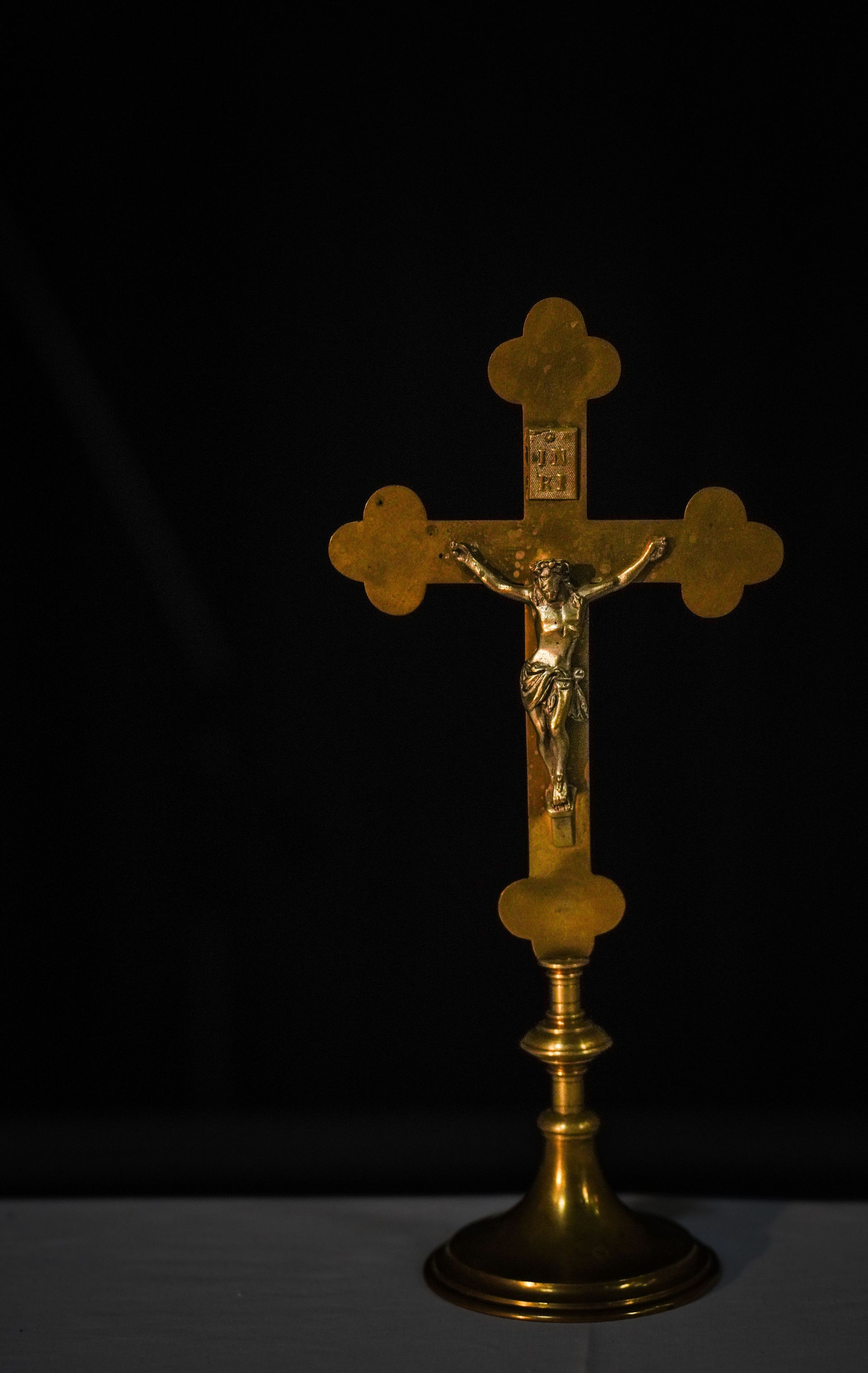
Second condition of true repentance and conversion is dying to sin.  In today’s gospel Jesus foresaw his death on the cross.  Like that serpent lifted up by Moses in the desert, Jesus believed his crucifixion and death on the cross will save his people from their sins.  We learn from Jesus it was necessary to die for sins.  Indeed, we must die for our sins when we are serious about repentance and conversion.  We realize our wrongdoings, confess our sins in Sacrament of Reconciliation, repent with a good intention, but we often fail to turn away from our sinfulness.  We like our sins and our old ways, and thus, fall into the same sins again.  Then, we are discouraged because our repentance and conversion does not work.


The Greek word for conversion is metanoia (μετάνοια).  One of the literal translations of metanoia is changing one’s mind. 

According to metanoia in such understanding, conversion is not just  temporarily turning away from evil but totally changing our thinking.  It is like dying for that sin that constantly bothers me and stands between God and me.  This kind of disposition against sin, which we usually like and do not want to go, is not easy and even painful.  That is why today’s gospel compares it to the crucifixion of Jesus, who fought sin to the point of pain, blood, and death on the cross.  We must die to our sins after the example of Jesus.  If we succeed to die with Christ, we will raise with him on Easter.


Today’s gospel is helpful to us as we pray and reflect about our spiritual growth during Lent.  The two conditions, trusting in God and dying to sin, are necessary to experience true repentance and conversion.  There are a few opportunities for Sacrament of Reconciliation before Easter at St. Martin of Tours.  Please have courage and do not hesitate to meet your sinfulness and then, to experience God in your true conversion during this blessed time of Lent.


Fr. Andrzej

By Jennifer Moscatello July 9, 2026
At first, today's Gospel sounds like a story about farming. Many of us enjoy gardening, and some of our parish families have spent generations working the land. It is natural to picture a farmer scattering seeds across a field. But Jesus is not teaching us about agriculture. He is teaching us about God. The sower is God Himself. The seed is His Word and His grace. The soil is our heart. The first thing Jesus wants us to notice is not the soil but the sower. He is amazingly generous. He scatters seed everywhere without measuring, without counting, and without asking whether the ground deserves it. Some seed falls on good soil, but some falls on rocky ground, among thorns, and even on the path. From a farmer's point of view, this may seem wasteful. From God's point of view, it is love. This is how God loves us. He never stops reaching out to us. He never says, "This person is not worth it." His grace is offered to everyone – the faithful and the struggling, the saint and the sinner, the young and the old, the rich and the poor. No one is outside His love. No one is forgotten. Then Jesus gently turns our attention to ourselves. What kind of soil is my heart today? Am I open to God's Word? Do I allow His grace to take root, grow, and bear fruit in my daily life? God gives the same seed to each of us. The difference is not in the seed but in how we receive it. The prophet Isaiah in the first reading today gives us a beautiful promise: God's Word never returns empty. Like the rain that waters the earth, His Word always brings life. God is always working quietly and faithfully, even when we cannot see it. The message of today’s liturgy is full of hope. Every new day God continues to sow His grace into our lives. Every new day gives us another chance to become good soil. Let us thank God for His generous love. Let us open our hearts to His Word. And let us trust that, with His grace, our lives can bear fruit far beyond what we could ever imagine.  Fr. Andrzej
By Jennifer Moscatello June 26, 2026
In this Sunday's Gospel, Jesus thanks His Father because He has revealed the mysteries of the Kingdom to "the little ones." Then He invites us with these beautiful words: "Come to me, all you who labor and are burdened, and I will give you rest." Who are these "little ones"? Jesus is not speaking about people who are uneducated, poor, or weak. He is speaking about people with humble hearts. They know they need God. They know they are not perfect and that they cannot do everything on their own. They recognize that every blessing, every talent, and every good thing they have is a gift from God. They trust Him more than they trust themselves. The world often admires people who are successful, powerful, and independent. Humble people are sometimes overlooked. But in God's eyes, they are precious. They are open to His grace and ready to follow His will. That is why they are the first to recognize Jesus and welcome His Kingdom. The first reading gives us the same message. The prophet Zechariah speaks about a king who comes riding on a donkey, not on a war horse. He is gentle, humble, and brings peace. This king is Jesus. He does not come to impress people or to show His power. He comes to serve, to save, and to lead us to His Father. This is also an important lesson for us. Whether we serve in our families, our parish, or our community, it is not about us. It is not our talents, our ideas, or our achievements that change hearts. It is God who does His work. We simply prepare the way for Him. We plant the seeds, and He gives the growth. God has always done great things through ordinary people with humble hearts. He is still looking for people who are willing to say "yes" to Him. May we become those "little ones" whom Jesus loves: humble enough to trust Him, open enough to receive His grace, and willing to help others come closer to Him. Then, even through our ordinary lives, God will do extraordinary things.  Fr. Andrzej
By Jennifer Moscatello June 18, 2026
(Jeremiah 20:10-13; Matthew 10:26-33) In the Bible, darkness or night often symbolizes spiritual desolation – a time when we feel distant from God or struggle to sense His presence in our lives. Most of us experience such moments sooner or later. They can be times of doubt, discouragement, sadness, or uncertainty. While these experiences are difficult, they are often part of our spiritual journey and growth. In today’s first reading, the prophet Jeremiah shares his own struggle. He feels afraid, overwhelmed, and alone. Yet he does not give up. Instead, he turns to God and places his trust in Him. Even in the midst of his suffering, Jeremiah believes that God is with him and will give him the strength to persevere. Jesus speaks about these difficult moments in today’s Gospel as well. Knowing that His disciples will face challenges and trials, He encourages them with a simple but powerful message: “Do not be afraid.” Even when God seems far away, He is still close to us. Even when we cannot feel His presence, He continues to watch over us with love and care. Jesus reminds us that we are precious in God’s eyes: “Do not be afraid; you are worth more than many sparrows.” I have experienced times of spiritual desolation in my own religious and priestly life. Looking back, I can see that those moments became opportunities for growth. They taught me humility, patience, and a deeper trust in God. During difficult times, it is important not to lose hope or make important decisions based on fear, anger, or discouragement. Instead, we are called to remain faithful in prayer and trust that God is leading us, even when the path ahead is unclear. One simple truth is worth remembering: after every night comes a new day. No matter how long or dark the night may seem, the dawn eventually arrives. In the same way, God’s light and grace will break through the darkness of our struggles. Holding on to this hope can help us persevere when life is difficult. Today’s readings remind us that we are never alone. God walks with us through every trial and every dark moment. He does not abandon us. He knows us, loves us, and remains faithful to us even when our faith feels weak. Today, we also celebrate Father’s Day. We thank God for our fathers and for all those who have been fatherly figures in our lives. We are grateful for their love, support, guidance, and sacrifices, especially during the times when we needed them most. May God bless them abundantly and fill them with His peace, joy, and strength. Happy Father’s Day!  Fr. Andrzej
By Jennifer Moscatello June 11, 2026
In this Sunday’s Gospel, Jesus looks at the crowds and sees people who are struggling, searching, and in need. St. Matthew tells us that His heart was moved with compassion for them. Jesus does not ignore their needs or pass them by. He notices them, loves them, and responds to them. This is an important reminder for us. God sees each one of us personally. He knows our joys, our worries, and our struggles. He cares deeply about His people and calls us to share that same compassion with others. After seeing the needs of the crowd, Jesus calls His disciples and sends them out to continue His mission. It is beautiful that the Gospel mentions each disciple by name. Jesus does not call a group of strangers. He calls each person personally. The same is true today. Each of us is known, loved, and chosen by God. Each of us has a mission to fulfill. This mission is not only for priests, deacons, religious, or professional ministers. Through our Baptism, all of us are called to be disciples and witnesses of Christ. We serve in different ways – in our families, workplaces, schools, parish ministries, and daily encounters with others. Each of us has gifts, talents, and life experiences that can help those who are struggling or in need. Often, we do not need to make extraordinary efforts. Sometimes simply giving our time, listening, visiting, or being present for someone can make a profound difference. Wherever we bring kindness, hope, encouragement, and faith, we continue the mission of Jesus. Today’s Gospel is also about relationships. Jesus cares for the crowd. Jesus calls his disciples personally. The disciples learn from Jesus and remain close to Him. Their ministry flows from their relationship with the Lord. As we serve others, we grow in love, strengthen our bonds with one another, and build up our parish community. The closer we are to Jesus through prayer, the Eucharist, and daily faithfulness, the more fruitfully we can serve others. The harvest is still abundant in our parish and in our community. There are many people who need a helping hand, a listening ear, and the love of Christ. Let us be aware of our call and our mission. Let us stay close to Jesus and close to the people we serve. And let us do so with gratitude and joy, knowing that when we give ourselves generously to others, we often receive far more in return. Like the first disciples, we too have been personally chosen and sent by the Lord. May we answer His call with willing and generous hearts.  Fr. Andrzej
By Jennifer Moscatello June 4, 2026
Today the Church celebrates the Solemnity of the Most Holy Body and Blood of Christ, traditionally known as Corpus Christi. Established in the thirteenth century to renew and honor the Church’s faith in the Real Presence of Jesus Christ in the Eucharist, this beautiful feast invites us to strengthen our faith and gratitude for one of the greatest gifts Jesus has given us – the Eucharist, His abiding presence among us. The Eucharist is not merely a symbol or a reminder of Christ. It is truly Jesus Himself – His Body, Blood, Soul, and Divinity – given for our salvation and as nourishment for our spiritual journey. Because we celebrate this mystery so often, we can sometimes lose our sense of wonder. Corpus Christi calls us to pause and remember the extraordinary gift we receive whenever we come to Mass. We are invited to approach the altar with gratitude and to adore Christ present in the Blessed Sacrament with faith, love, and reverence. In today’s Gospel (John 6:51-58), Jesus says: “I am the living bread that came down from heaven; whoever eats this bread will live forever.” Jesus speaks these words with clarity and love. Through the Eucharist, He gives Himself completely to us so that we may remain close to Him and find strength for our daily lives. Yet our encounter with Christ does not end when Mass is over. The Lord whom we receive in Holy Communion is also present in our brothers and sisters, especially those who are poor, lonely, suffering, or in need. Jesus reminds us: “Whatever you did for one of these least brothers of mine, you did for me” (Matthew 25:40). The Eucharist not only nourishes us – it sends us forth. We receive the Body of Christ so that we may become His hands, His voice, and His heart in the world. The love we experience at the altar should be reflected in the love we show to others. Our worship of Christ in the Eucharist should lead us to recognize and serve Christ in those around us. As a parish family, we are blessed with many opportunities to grow closer to the Lord. I warmly invite you to join us for Daily Mass at 8:30 a.m., Eucharistic Adoration on Mondays at 6:00 p.m., and First Friday Adoration following the 8:30 a.m. Mass. Come and spend time with Jesus present in the Blessed Sacrament. I also encourage you to participate in the ministries of our parish, where together we can share Christ’s love with those in need. May this beautiful feast renew our love for the Eucharist and deepen our desire to follow Jesus. May we recognize Him at the altar and in one another, and may His presence guide and strengthen us each day. Blessed Feast of Corpus Christi! Fr. Andrzej
By Jennifer Moscatello May 21, 2026
This Sunday we celebrate the great feast of Pentecost – the day when the Holy Spirit descended upon the Apostles gathered in prayer with Mary in the Upper Room. Filled with the Holy Spirit, the fearful disciples were transformed into courageous witnesses of Christ and went out to preach the Gospel with faith and joy. Today’s readings and liturgy reminds us that the Holy Spirit is not only a gift for the Apostles, but for all of us today. The Holy Spirit guides and strengthens us in our daily lives – in prayer, work, studies, decisions, conversations, and responsibilities. Every good inspiration, wise decision, and act of kindness comes through God’s grace and the guidance of the Holy Spirit. Pentecost also reminds us to pray more often to the Holy Spirit. A simple prayer, “Come, Holy Spirit,” can bring peace, wisdom, courage, and strength into our hearts. This Pentecost celebration is especially meaningful for our parish because our Religious Education students who completed their preparation year will receive the Sacrament of Confirmation this Sunday. What a providential blessing that they will receive the gifts of the Holy Spirit on the very feast of Pentecost! Just as the Apostles were strengthened and sent forth by the Holy Spirit, our young people will also be sealed with the gifts of the Spirit and called to live their Catholic faith with courage and conviction. The celebration will take place at St. Joseph Catholic Church. Please keep our Confirmation students, their families, sponsors, and catechists in your prayers. These are the names of our Confirmation students: Jacob, Sean, Braeden, Carson, Stephen, Ashton, Kimty, Drake, Cecelia, Rockford, and Gabriella. May this sacrament deepen their relationship with Christ and strengthen them to become faithful disciples in today’s world. May this Pentecost renew all of us. Let us open our hearts once again to the Holy Spirit and pray with faith: “Come, Holy Spirit, fill the hearts of Your faithful and kindle in them the fire of Your love.” Happy Pentecost!  Fr. Andrzej
More Posts