
Forgiveness Seventy Seven Times

Jenny Drzewiecki • October 10, 2023

The gospel passage assigned this Twenty Fourth Sunday in Ordinary Time does not intend to teach us economy nor encourage us to pay our debts. It is rather about relationship with our brothers and sisters, and with God. It challenges and inspires us for spiritual growth.


The first thing that comes to my mind after reading today’s gospel is forgiveness. Limitless forgiveness is an essential element of our relationship with God and each other. The gospel strongly encourages us to forgive others because God forgives us much more than we can even imagine. An authentic forgiveness of those who sinned against us is necessary to receive forgiveness from God, and to honestly pray “Our Father.” In fact, forgiveness to others is the only condition I ask people who are coming to confession before I give them absolution. It is a “must” before receiving God’s forgiveness for our wrongdoings and mistakes. We are encouraged to forgive even if it is hard to do so. Otherwise, we will be similar to that “wicked servant” from today’s parable, who received a huge forgiveness of his debt but was not able to forgive a little debt of his co-servant.


Today’s gospel links God’s forgiveness with our forgiveness. We need both forgiveness (God’s and ours) to grow spiritually and to enter the Kingdom of God. It is a challenge but this challenge enables us to grow in the eyes of God.

I am always encouraged when I recall the great act of forgiveness by the Amish community, who were able to forgive Charles Roberts when he killed their innocent children in school in 2006 in Pennsylvania. I am always inspired by John Paul II who forgave Mehmet Ali Ağca his attempt at killing him in 1981 in Rome. These heroic examples of forgiveness build up our faith and courage us to forgive those who sinned against us. Similarly, my faith is uplifted when I hear your own stories of forgiveness and struggle to reconcile. Thank you very much for your example and effort.


Peter struggled to forgive and was seeking compassion from Jesus because it was “his brother” who sinned against him. Indeed, it is hard to forgive those who are family members and suppose to love us. We do not expect sin but rather love and kindness from our loved ones. When they hurt us it is very painful. It is really hard to forgive them again and again. I believe it is easier to forgive our enemy once than to forgive “our brother” always.


Lastly, forgiveness is an act of my free will. It is up to me to forgive or not. Even if I am not ready for reconciliation I can forgive in the silence of my heart. I am the first beneficent of this act. An act of forgiveness liberates my mind and heart. In fact, when I forgive I first help myself. I cannot honestly pray and freely relate to God and other people when there is hatred in my heart. Thus, Christ asked us to forgive always.


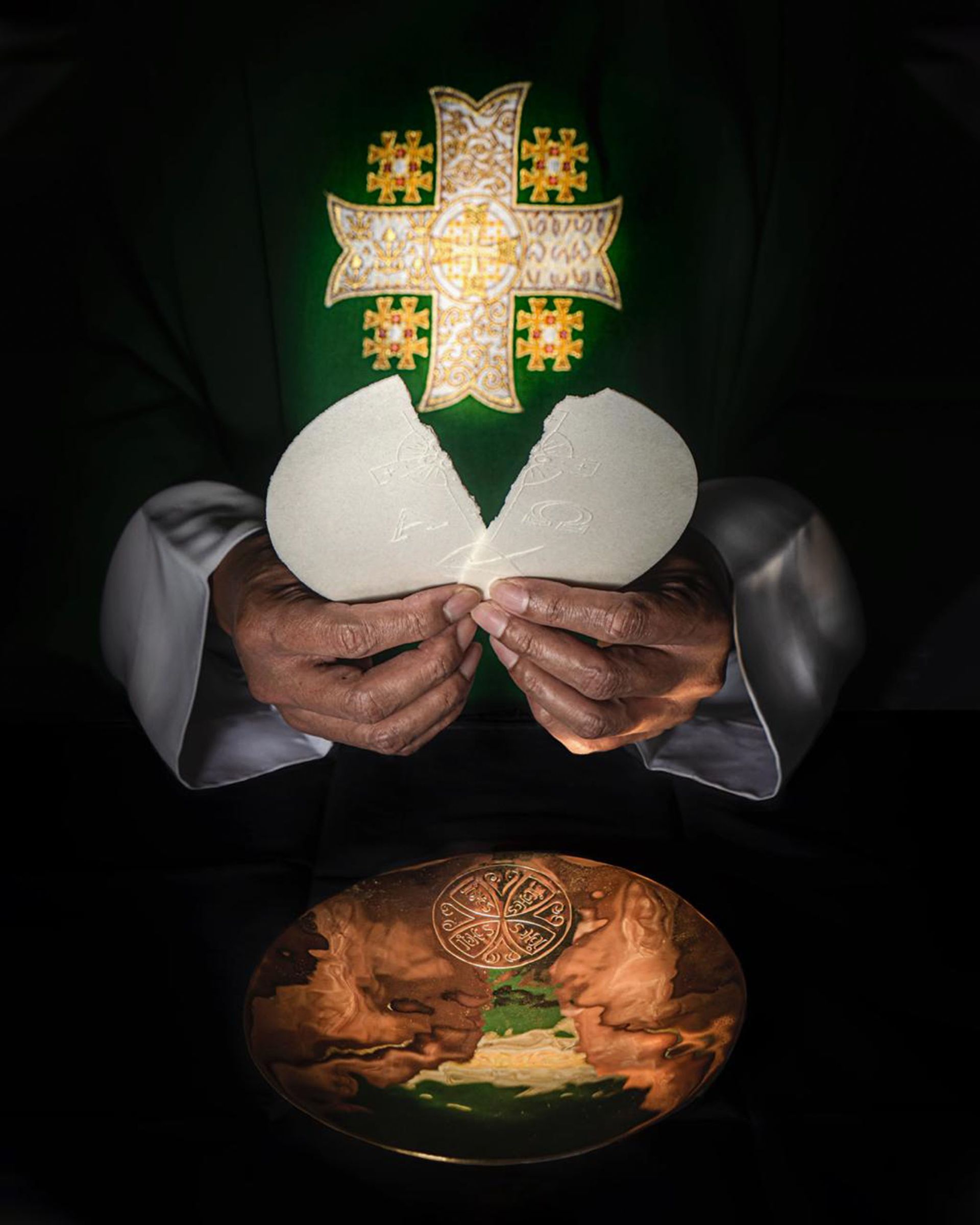
Today’s theme of forgiveness reminds us about the Sacrament of Reconciliation. It is a place and moment to forgive and receive forgiveness. I encourage you dear brothers and sisters to take advantage of this sacrament more often. We offer confessions in our church on Mondays during Eucharistic adoration at 6pm, and on Saturdays at 3pm before evening Mass. Additionally we offer confessions on First Fridays during adoration in the morning and evening. Besides, you can always make an appointment with a priest and make confession anytime you need. Do not hesitate to make us priests busy with confessions. It is one of the most beautiful ministries we can offer to you.


Fr. Andrzej

By Jenny Drzewiecki January 4, 2026
The Feast of the Epiphany celebrates God’s great revelation: Jesus Christ is made known not only to Israel, but to all nations. Guided by a star, the Magi set out on a journey of faith, searching for the newborn King. Their pilgrimage reminds us that true faith requires trust, perseverance, and generous hearts. When they encounter the Child, they offer gifts that reveal who Christ is – our King, our God, and our Savior. A beautiful Christian legend speaks of a “fourth Wise Man” named Artaban. Like the Magi, he followed the star, longing to meet Jesus. Yet along the way, he encountered people in great need. Each time, Artaban stopped to help, using the precious gifts he had intended for the Child. Because of these acts of mercy, he never reached Bethlehem in time. Still, he continued his journey, serving the poor and searching for Christ throughout his life. Years later, Artaban finally understands the meaning of his journey. He discovers that every act of love he offered to those in need was, in fact, an encounter with Christ himself. The King he sought was present not only in Bethlehem, but in the suffering, the forgotten, and the poor. This story beautifully echoes the message of Epiphany. The Magi recognized Christ in the Child of Bethlehem; Artaban recognized him in acts of compassion. Both remind us that Christ reveals himself to those who seek him with sincere hearts. As Jesus tells us, “Whatever you did for one of these least brothers of mine, you did for me” (Mathew 25:40). The Epiphany invites us to ask: Where do we recognize Christ today? We may not see a star in the sky, but we can find him in our neighbors, especially those in need. Like the Magi, we are called to seek Christ in faith, and like Artaban, we are called to serve him in love. May this feast help us recognize Christ revealed in Word and Sacrament, and in one another. Happy Epiphany! Fr. Andrzej
By Jenny Drzewiecki December 29, 2025
The Feast of the Epiphany celebrates God’s great revelation: Jesus Christ is made known not only to Israel, but to all nations. Guided by a star, the Magi set out on a journey of faith, searching for the newborn King. Their pilgrimage reminds us that true faith requires trust, perseverance, and generous hearts. When they encounter the Child, they offer gifts that reveal who Christ is – our King, our God, and our Savior. A beautiful Christian legend speaks of a “fourth Wise Man” named Artaban. Like the Magi, he followed the star, longing to meet Jesus. Yet along the way, he encountered people in great need. Each time, Artaban stopped to help, using the precious gifts he had intended for the Child. Because of these acts of mercy, he never reached Bethlehem in time. Still, he continued his journey, serving the poor and searching for Christ throughout his life. Years later, Artaban finally understands the meaning of his journey. He discovers that every act of love he offered to those in need was, in fact, an encounter with Christ himself. The King he sought was present not only in Bethlehem, but in the suffering, the forgotten, and the poor. This story beautifully echoes the message of Epiphany. The Magi recognized Christ in the Child of Bethlehem; Artaban recognized him in acts of compassion. Both remind us that Christ reveals himself to those who seek him with sincere hearts. As Jesus tells us, “Whatever you did for one of these least brothers of mine, you did for me” (Mathew 25:40). The Epiphany invites us to ask: Where do we recognize Christ today? We may not see a star in the sky, but we can find him in our neighbors,especially those in need. Like the Magi, we are called to seek Christ in faith, and like Artaban, we are called to serve him in love. May this feast help us recognize Christ revealed in Word and Sacrament, and in one another.  Happy Epiphany! Fr. Andrzej
By Jenny Drzewiecki December 25, 2025
As we celebrate the birth of Jesus this Christmas, our hearts turn once again to the beautiful message the angels proclaimed over Bethlehem: “Glory to God in the highest, and on earth peace to people of good will.” Peace is one of the most precious gifts Christ brings. It is more than the absence of conflict; it is the deep calm that comes from knowing God is with us. In a world that often feels restless and divided, Christmas reminds us that peace begins in the quiet of our hearts – when we welcome the Lord, trust in his love, and allow his light to guide our steps.  Saint Mother Teresa of Calcutta often said, “Peace begins with a smile.” Even the smallest gesture of warmth can open a door, soften a heart, or brighten someone’s day. A smile, a kind word, a helping hand, or a moment of sincere attention can become a seed of peace. When we reach out to our neighbor – whether in our family, parish, or community – we allow Christ’s peace to take flesh once again in our world. May this holy season encourage us to be instruments of peace through these simple acts of love. Every effort we make, no matter how small, becomes a reflection of the peace the newborn Savior brings. Christmas Wishes Dear Parishioners, may the newborn Christ bless your homes with his gentle and lasting peace. May he calm every worry, strengthen every bond of love, and fill your days with hope and grace. May your celebrations be joyful, your gatherings warm, and your hearts open to the quiet presence of God who comes to dwell among us. May the peace of Christ – stronger than fear, deeper than sorrow, brighter than darkness – rest upon you and remain with you throughout the Christmas season and into the New Year. And may each smile and every small act of kindness you offer become a blessing that spreads his peace to others. On behalf of the Parish Staff – Merry Christmas and blessings of Peace to all!
By Jenny Drzewiecki December 14, 2025
This Sunday the Church invites us to rejoice. Gaudete means “Rejoice,” and it reminds us that Christmas is near. Even though Advent is a season of quiet preparation, today the liturgy lifts our hearts. The rose candle on the Advent wreath and the brighter liturgical mood are signs of this joy. God is close. His coming brings hope, peace, and spiritual light. The word Gaudete comes from the ancient Entrance Antiphon of the Mass for this day: “Gaudete in Domino semper” – “Rejoice in the Lord always.” It speaks of the spiritual joy that comes from complete trust in God – a joy that cannot be taken away and that brings a lasting peace of heart. Gaudete is a joyful reminder in the middle of Advent that the Lord is near, and our waiting is filled with hope, living faith, and gladness. In today’s Gospel, we meet John the Baptist. He is a strong and humble messenger of Christ. John knows that his mission is not to draw attention to himself, but to point everyone toward Jesus. He prepares the way by calling people to open their hearts and turn back to God. John shows us what real readiness looks like – simple, honest, and faithful. John the Baptist can be an inspiration for each one of us. Like him, we are called to prepare the way for the Lord in our own lives and in our parish community. We do this when we pray, when we forgive, when we care for someone in need, and when we bring peace into our homes. Every small act of goodness makes more room for Christ to come. As we enter this joyful Sunday, let us pause and allow God’s hope to rise within us. Let us rejoice not because everything in life is perfect, but because God is with us. He is coming to bring healing, mercy, and new beginnings.  May this Gaudete Sunday fill our hearts with the joy that only Christ can give, and may we, like John the Baptist, help others to see the Lord who is near. “Rejoice in the Lord always; again I will say, Rejoice. Let your gentleness be known to everyone. The Lord is near” (Philippians 4:4–5). Fr. Andrzej
By Jenny Drzewiecki November 25, 2025
As we enter the season of Advent, the Church invites us to begin again. Advent marks the start of a new liturgical year – a fresh spiritual chapter in which God offers us new opportunities for grace, renewal, and growth. Just as the calendar year gives us January to start anew, the Church gives us Advent as a sacred beginning, a time to reset our hearts and refocus our lives on what truly matters. Advent reminds us that God is always giving us opportunities to grow, to change, and to begin again.  Advent is a season of hope and quiet expectation. It asks us to slow down, to reflect, and to prepare. One important theme of Advent is peace – peace in our hearts, peace in our families, our parish community, and peace in the world. During these weeks, we are encouraged to look at our lives and ask where we need God’s peace. In a world often marked by noise, division, and haste, Advent calls us to become people of peace, open to God’s gentle presence and ready to bring reconciliation where it is needed. At the same time, Advent helps us to prepare for Christmas. We often get busy with shopping, cooking, and planning for the holidays. But Advent reminds us to prepare spiritually as well – to make room for Christ in our lives, to welcome him with renewed faith, and to approach the holidays with a deeper sense of gratitude and purpose. When our hearts are prepared, Christmas becomes more meaningful and joyful. May this Advent be for each of us a new beginning: a time of reflection, a season of peace, and a joyful preparation for the coming of Christ. Let us walk these weeks together as a parish family, ready to welcome the Lord who always comes to make all things new. Blessed Advent! Fr. Andrzej
By Jenny Drzewiecki November 25, 2025
The body content of your post goes here. To edit this text, click on it and delete this default text and start typing your own or paste your own from a different source.
More Posts