
First Communion Sunday

Diane Winkowski • May 2, 2024

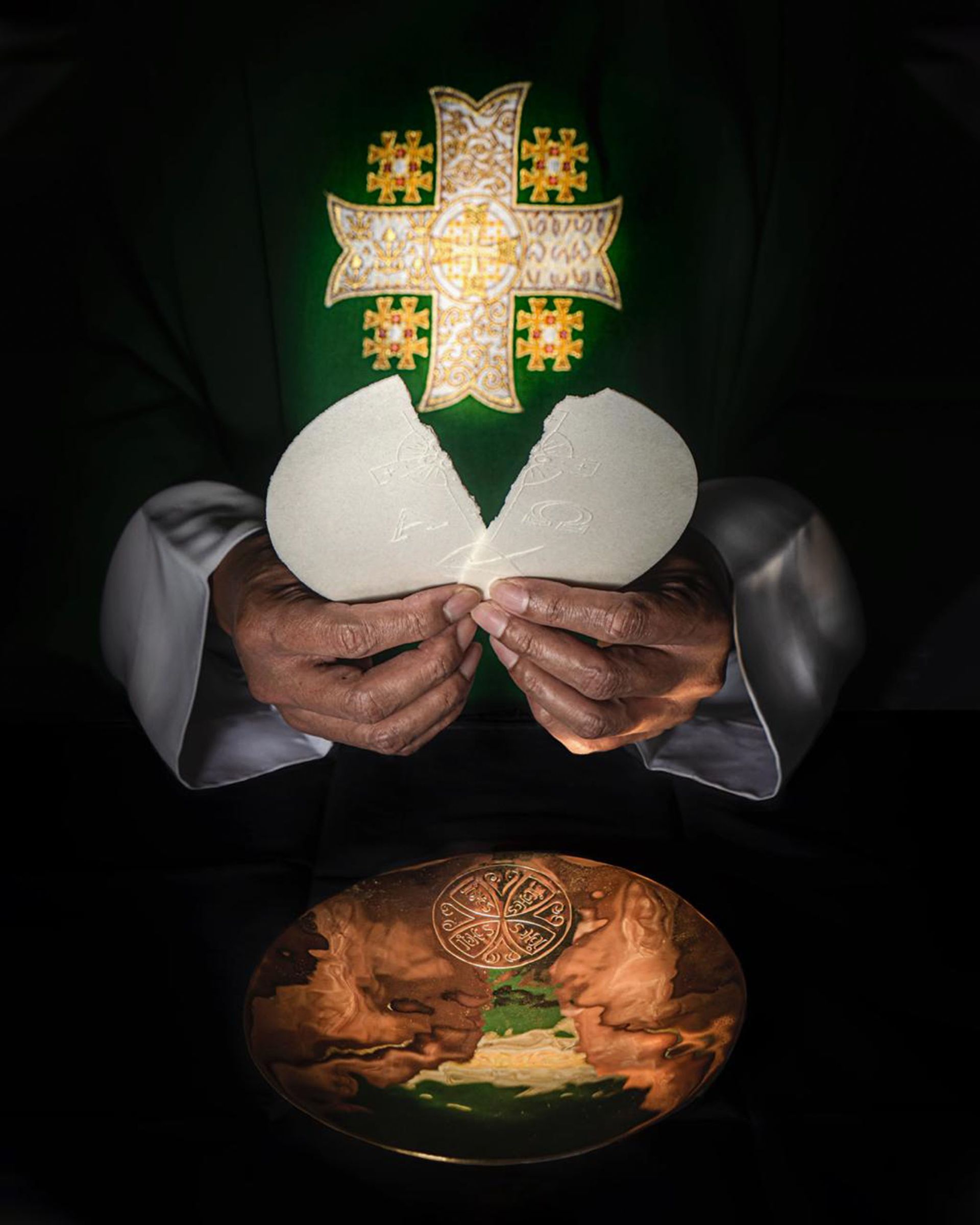
We are blessed to celebrate the Sacrament of First Communion in our parish.  Nine of our religious education students will receive Eucharistic Jesus in their hearts during our solemn Mass at 10:30am on Sunday.  It is always great to see the children wearing formal attire, crowning Mary, praying hard, and reading and singing during their First Communion Mass.  I invited and encouraged other children and youth of our parish to join us on this special occasion.  It is a good opportunity to remember the day we received the First Communion a few or perhaps many years ago. Children who will receive Holy Communion this Sunday:  Bradley, Vivian, Ella, Lincoln, Mark, Diezel, Henry, Grace, Jocelyn.


I would like to express my gratitude to the children who will receive their First Communion.  We wish them to follow Jesus closely, who is “the way, the truth, and the life” (John 14:6).  We encourage them to continue their religious education at our parish in the following years, and receive another important Sacrament, Confirmation in a few years.  I am grateful to their parents for their support and good example, and their family members for being with them and with us during this special day at St. Martin of Tours.  To the teachers, especially Joy Heuser and Carey Logan, who have been preparing our

children for their First Communion.  I am also grateful to those who prepared our liturgy, took photos, and decorated the church for this occasion.


At the same time, I will take this opportunity to remind a few principles about receiving Holy Communion and reverence of Eucharist at St. Martin of Tours parish.


It is a very special moment of encounter with Eucharistic Jesus during receiving Holy Communion.  Holy Communion could be received as either bread or bread and wine.  The wine (cup) is not necessary when receiving the Eucharist but we encourage our parishioners to receive Holy Communion in both forms.  There are three essential requirements to receive Holy Communion:

 1.  The person must be baptized and have understanding of faith in the real presence of Christ in

     the Eucharist.

 2. The person must be in the state of grace, which is, at the moment of the Holy Communion,

     be free from a mortal sin.

 3. The person must fast at least one hour before receiving Holy Communion.

     Fasting does not include taking medication and drinking water.


In short, we are encouraged to receive Holy Communion during Mass.  Holy Mass without Communion is like a birthday party without dinner and a cake. However, we receive Holy Communion only in the state of grace, without a mortal sin.


Additionally, we receive Holy Communion on the hand or tongue. Both ways are equally correct.  Feel free to receive the Blessed Host either way.  But even more important is to reflect about if you are ready to receive Eucharistic Jesus into your heart.  Please take some time to pray in silence before and after receiving Holy Communion.


Lastly, you can receive Holy Communion every day during Holy Mass. We have daily Mass at 8.30am (except Saturday Mass is at 4pm) in our church.  You are welcome to join us for weekly adoration of the Blessed Sacrament and opportunity for confession on Monday at 6pm.


Holy Communion helps us to understand the act of Christ’s passion, death, and resurrection.  It strengthens our faith and encourages us on the journey to Salvation. Let’s be grateful for the great gift of Eucharist in our life.


Fr. Andrzej


By Jenny Drzewiecki November 25, 2025
As we enter the season of Advent, the Church invites us to begin again. Advent marks the start of a new liturgical year – a fresh spiritual chapter in which God offers us new opportunities for grace, renewal, and growth. Just as the calendar year gives us January to start anew, the Church gives us Advent as a sacred beginning, a time to reset our hearts and refocus our lives on what truly matters. Advent reminds us that God is always giving us opportunities to grow, to change, and to begin again.  Advent is a season of hope and quiet expectation. It asks us to slow down, to reflect, and to prepare. One important theme of Advent is peace – peace in our hearts, peace in our families, our parish community, and peace in the world. During these weeks, we are encouraged to look at our lives and ask where we need God’s peace. In a world often marked by noise, division, and haste, Advent calls us to become people of peace, open to God’s gentle presence and ready to bring reconciliation where it is needed. At the same time, Advent helps us to prepare for Christmas. We often get busy with shopping, cooking, and planning for the holidays. But Advent reminds us to prepare spiritually as well – to make room for Christ in our lives, to welcome him with renewed faith, and to approach the holidays with a deeper sense of gratitude and purpose. When our hearts are prepared, Christmas becomes more meaningful and joyful. May this Advent be for each of us a new beginning: a time of reflection, a season of peace, and a joyful preparation for the coming of Christ. Let us walk these weeks together as a parish family, ready to welcome the Lord who always comes to make all things new. Blessed Advent! Fr. Andrzej
By Jenny Drzewiecki November 25, 2025
The body content of your post goes here. To edit this text, click on it and delete this default text and start typing your own or paste your own from a different source.
By Jenny Drzewiecki November 16, 2025
This weekend, we joyfully celebrate the feast of St. Martin of Tours, our parish’s patron and guide in faith. His life reminds us why our community bears his name – because we are called, like him, to live lives of compassion and mercy.  St. Martin was a Roman soldier who one day met a poor beggar trembling in the cold. Moved with compassion, he took his sword, cut his cloak in half, and shared it with the man. That night, Martin dreamed of Jesus wearing that same cloak, saying, “Martin, the catechumen, has clothed me with this garment.” From that moment on, Martin dedicated his life entirely to Christ and to serving the poor, the sick, and the forgotten. Martin became a religious, priest and later a bishop of Tours, France. As a bishop, he was known not for wealth or power but for humility and love. He walked among his people, bringing comfort, healing, and reconciliation wherever he went. His simple yet profound acts of mercy revealed Christ’s love to all. St. Martin is venerated in the Catholic Church throughout the world. He is the patron saint of many groups including soldiers, the poor, and France itself. Saint Martin's Day, November 11th, is celebrated across Europe with various traditions. In Tours, France, where Martin served as bishop and where he is buried, the city hosts a special procession through the streets that includes a horse without a rider. This horse reminds everyone of the moment when St. Martin got off his horse to share his cloak with a beggar, a powerful sign of compassion. There's also a festive dinner, with the traditional Martin's goose as the main dish, and the local wine producers open their cellars for tastings of the new season's wine. As we celebrate our parish feast, we give thanks for the example of our patron saint. St. Martin’s spirit continues to inspire our parish community – in every outreach to the needy, every meal shared, every visit to the hospital or prison, every moment of forgiveness and any act of kindness. His legacy calls us to see Christ in those around us and to live as a true community of mercy and service. May this feast renew in us a deeper commitment to follow Christ with the same compassion and faith that marked the life of St. Martin of Tours. “Whatever you did for one of these least brothers and sisters of mine, you did for me.” (Matthew 25:40) Fr. Andrzej
By Jenny Drzewiecki November 9, 2025
Today we celebrate the Feast of the Dedication of the Lateran Basilica, the cathedral church of the Bishop of Rome – the Pope. This feast honors the dedication of the Basilica of St. John Lateran, the oldest and highest-ranking of the four major basilicas. Built by Emperor Constantine around the year 324 AD, it was the first church officially dedicated to Christian worship after the time of persecution. Though many might think of St. Peter’s Basilica as the Pope’s church, it is actually the Lateran Basilica that holds this title. The Basilica of St. John Lateran is called the “mother and head of all churches in the world.” This celebration teaches us three important things. First, it reminds us about the role of the Pope. The Lateran Basilica as the “mother church” is a sign of the unity of the Church around the successor of St. Peter. The Pope’s mission is not about power but about serving others and protecting the faith. Through his leadership, the Church stays united in teaching, prayer, and love. We are invited to pray for the Pope and stay in communion with him as he leads us closer to Jesus Christ. Second, this feast helps us appreciate our churches. The Lateran Basilica, like every church, is not just a building of stone but a holy place where God lives among His people. When we enter a church, we come into a sacred space where heaven and earth meet. The beauty and peace we find there remind us of that God also wants to dwell in our hearts. Each of us is called to be a living temple where God’s love shines. Third, this day reminds us that we belong to one Church community. The Lateran Basilica, as the “mother church,” is a symbol of unity for all believers around the world. The Church is not just an organization but a family of faith. We are “living stones” (1 Peter 2:5), building up the Body of Christ through our love, faith, and service to one another. As we celebrate this feast, let us thank God for our unity in the Church, for our sacred places of worship, and for our mission to live as members of Christ’s living temple. May our own parish, St. Martin of Tours, always be a sign of that unity – a place where God is loved, the Gospel is lived, and everyone feels at home. Fr. Andrzej  Photo Credit: https://www.flickr.com/photos/jiuguangw/4982078131/in/photostream/
By Jenny Drzewiecki November 2, 2025
Today we pray for all the faithful departed – our family members, friends, and all who have died and gone before us in faith. The Feast of All Souls reminds us that love never ends. When we pray for the dead, we show our love and trust in God’s great mercy. Death can make us sad, but our faith gives us hope. Jesus said, “I am the resurrection and the life; whoever believes in me will live even if he dies.” Because of this promise, we believe that those who have died are not lost – they are alive in God. We remember them with love, and we ask God to welcome them into his peace. This day also helps us think about our own lives. We are all on a journey toward heaven. By living with kindness, forgiveness, and faith, we prepare ourselves to meet God one day. Our prayers for others also remind us to stay close to God. As a parish community, let us pray for all souls – those we knew and those forgotten. May our prayers bring them closer to God’s light and peace. And may we live each day with hearts full of love and hope in the resurrection. Fr. Andrzej Indulgences for the Feast of All Souls The Church gives special indulgences during the Feast of All Souls to encourage prayer and charity for the souls in purgatory. These indulgences express our faith in the Communion of Saints – the spiritual bond between the faithful on earth, the souls in purgatory, and the saints in heaven. An indulgence is the remission before God of the temporal punishment due to sins whose guilt has already been forgiven. In simpler terms, even after we confess our sins, there can remain a need for healing or purification. Through indulgences, the Church – by the power of Christ – applies the spiritual treasury of Jesus’ sacrifice to help in this purification of the souls in purgatory. When we gain indulgences for the dead, we show love and mercy toward them, continuing the bond we shared in life. It is one of the most beautiful ways to live the Gospel of charity. Conditions to obtain these indulgences: To gain a plenary indulgence (full remission of temporal punishment) for a soul in purgatory during the days around All Souls (usually from November 1-8), the faithful must: · Visit a cemetery and pray for the departed (this indulgence can be applied only to the souls in purgatory). · Go to Sacramental Confession (within about 20 days before or after the act) · Receive of the Holy Communion · Pray for the intentions of the Pope (such as one Our Father and one Hail Mary) · Make a resolution to detach from all sins, even venial sins  If any of these conditions are not fully met, partial indulgence is still granted. Eternal rest grant unto them, O Lord, and let perpetual light shine upon them. May they rest in peace. Amen.
By Jenny Drzewiecki October 26, 2025
Last Sunday, we reflected on ‘work and prayer’ – two things that every disciple of Jesus needs. Both are important in our journey of faith. Work keeps us active in service, and prayer keeps us close to God. We need both in balance to live as true followers of Christ. This Sunday, the readings concentrate more on prayer. In the Gospel, Jesus tells the story of two men who go to the temple to pray: one is a Pharisee, the other a tax collector. The story is simple, but it shows us something very profound about how we stand before God. The Pharisee prays proudly. He thanks God that he is not like others. He talks about all the good things he does – fasting, giving money, and keeping the law. The tax collector, on the other hand, stands far away. He feels unworthy. He does not even lift his eyes to heaven. He simply says, “O God, be merciful to me, a sinner.” And Jesus says that it was the tax collector, not the Pharisee, who went home right with God. The difference between the two is not their actions, but their hearts. The Pharisee’s good deeds are fine, but his heart is proud. He thinks he can earn God’s love by praising himself. The tax collector knows he is weak and needs God’s mercy. His honest and humble heart opens the way for God’s forgiveness. This parable invites us to look at ourselves. How do we pray? Do we sometimes compare ourselves to others? Do we think we are better than someone else because we pray more or do more good things? Pride can quietly grow even in good works. True prayer starts with humility and gratitude – knowing that everything good we have is a gift from God. In the temple, only one man truly prayed – the one who knew he was a sinner. God can fill only an empty heart. If we are full of ourselves, there is no room for God. But when we come before God with open and humble hearts, God’s grace fills us with peace and love. May this Gospel remind us to pray with humility, gratitude, and trust. God does not look for perfection but for hearts that are honest and humble. As Jesus said, “Those who exalt themselves will be humbled, and those who humble themselves will be exalted.” (Luke 18:14)  Fr. Andrzej
More Posts